
Cosmetic Dentistry · Veneers
Composite vs. Porcelain Veneers: The Honest Truth About What Lasts


Composite veneers look great on the day they’re placed. The real question is how they look in year three, five and ten.
At a recent Los Angeles dental symposium, one of the world’s leading educators on composite resin put four slides on the screen: wear, chip, stain and matte. Those are the four ways composite breaks down over time. When even the experts in a material point out its limits, patients deserve to hear it too.
After 18+ years of cosmetic dentistry in Beverly Hills, here’s how I explain the difference to my patients, and why porcelain is my recommendation for most smile makeovers.
The 4 Disadvantages of Composite Veneers
Composite is a tooth-colored resin, a plastic reinforced with glass filler, that’s sculpted onto your teeth and hardened with a light. It’s a useful material, but it has limits every patient should know before choosing it for a full smile.
01Wear
Composite is softer than enamel and much softer than porcelain. Chewing, brushing and grinding round off edges that started crisp, which can make a smile look older.
02Chipping
Thin resin edges are prone to small chips, especially with hard foods, nail biting or nighttime clenching. Each chip means another repair visit.
03Staining
Resin is more porous than glazed porcelain. Coffee, tea, red wine and smoking can discolor it, often with a brown line at the edges. Whitening won’t lighten stained composite.
04Loss of shine
The high polish on day one roughens and dulls over time. A matte surface looks less natural and attracts more stain and plaque, so it needs periodic re-polishing.
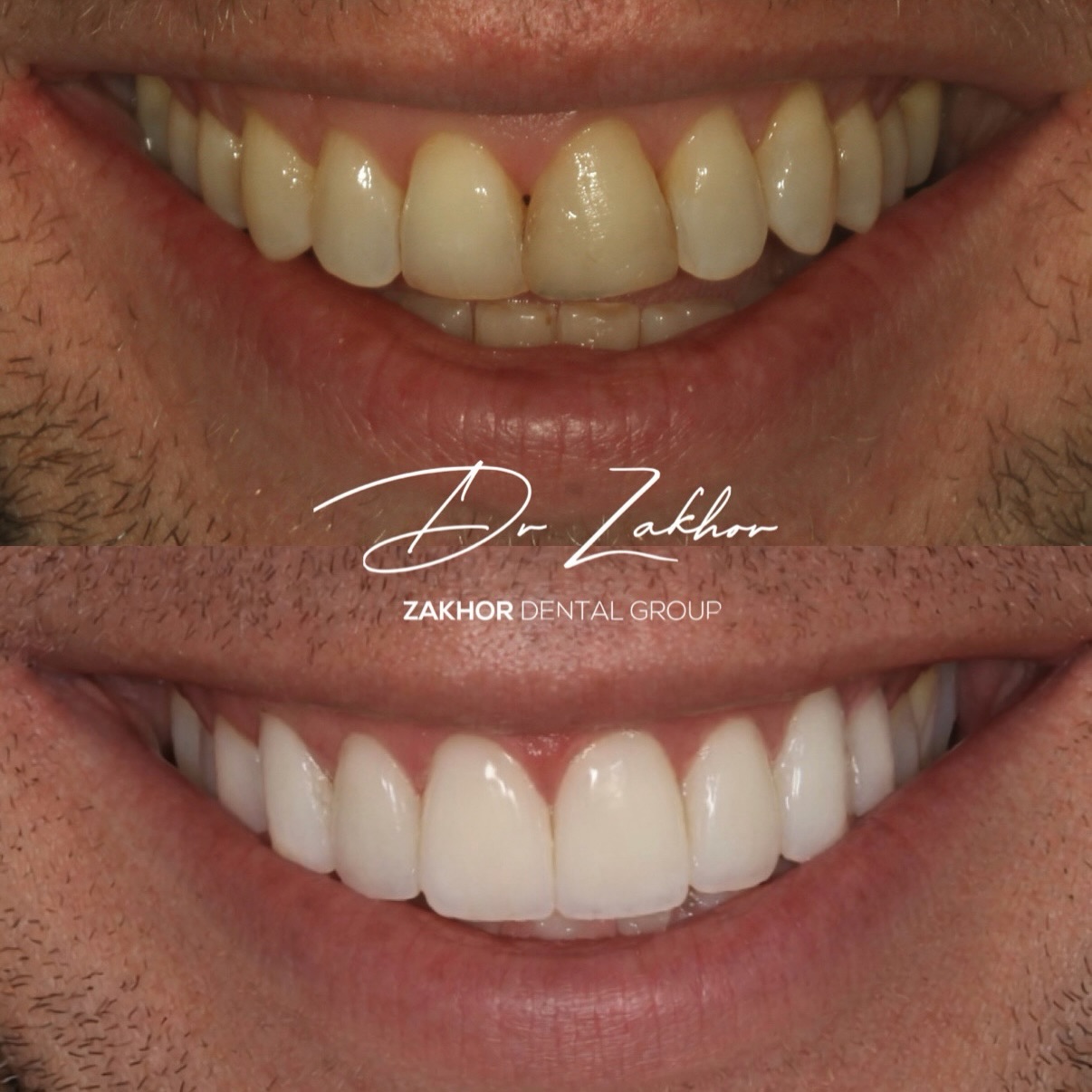
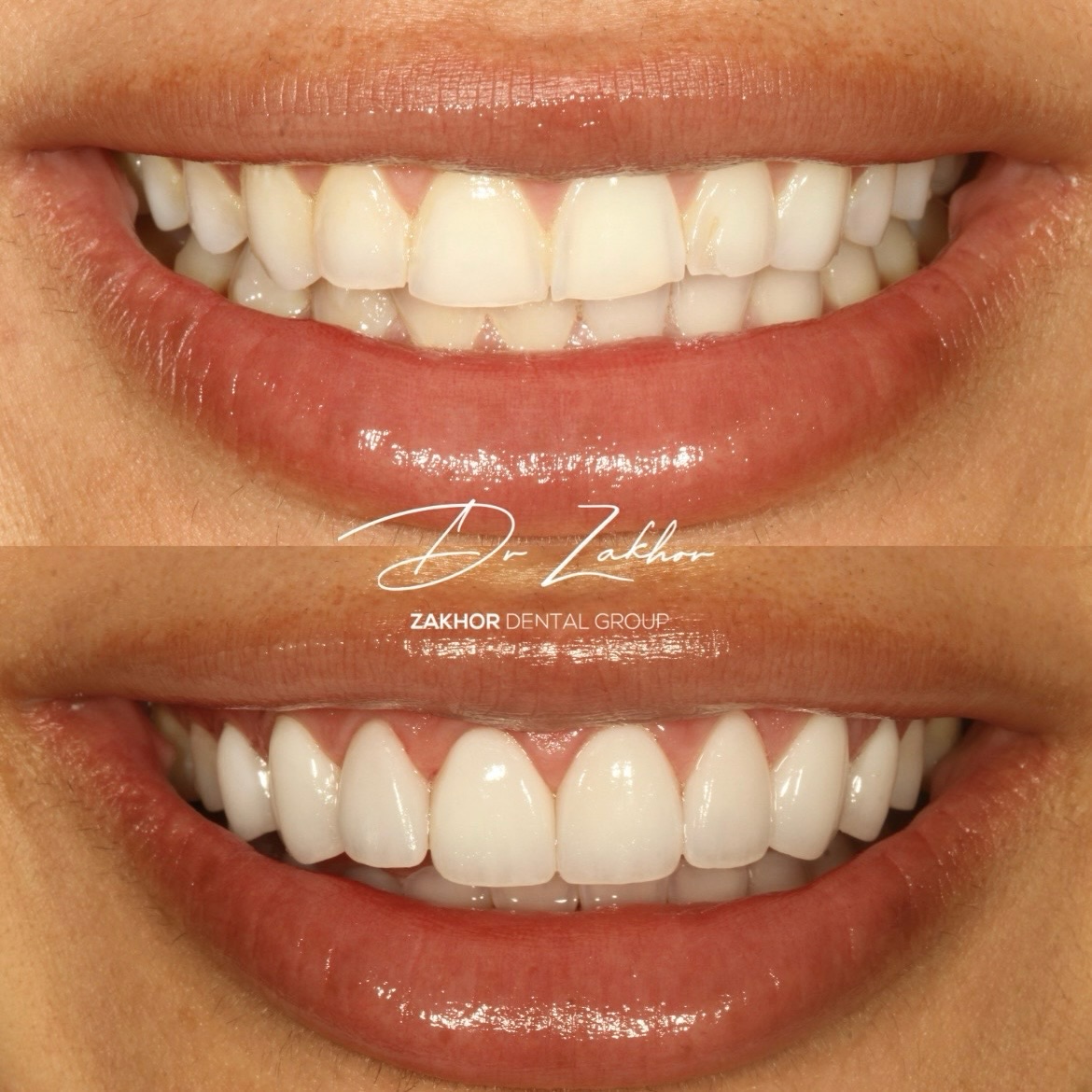
Why Porcelain Veneers Hold Up Better
Porcelain veneers are thin shells of dental ceramic, custom-made in a lab and bonded to the front of your teeth. They answer each of composite’s four weak points.
- Resists wear. Hard, glass-based ceramic keeps its shape and edge length year after year.
- Stronger edges. Bonded to enamel, porcelain becomes very strong. Chips are uncommon with a well-planned case and a night guard for grinders.
- Stain-resistant. Glazed porcelain is non-porous, so the shade you choose is the shade you keep.
- Lasting shine. The glaze is fired on at high temperature and keeps its natural luster without re-polishing.
- Lifelike light. Porcelain transmits and reflects light much like enamel, so it looks natural up close and on camera.
- Gum-friendly. The smooth glazed surface collects less plaque at the gumline than resin.
What the research shows
Porcelain veneers have decades of clinical data behind them.
(review of 25 studies, ~6,500 veneers)
in a long-term clinical study
No restoration lasts forever. But porcelain gives you the best chance of a smile that still looks right a decade from now.
Composite vs. Porcelain at a Glance
| Composite veneers | Porcelain veneers | |
|---|---|---|
| Material | Resin with glass filler, sculpted chairside | Custom lab-made dental ceramic |
| Wear | Wears down over time | Highly wear-resistant |
| Chipping | More prone to edge chips | Strong once bonded; chips uncommon |
| Staining | Can discolor, especially at margins | Non-porous glaze resists stain |
| Shine | Dulls; needs re-polishing | Fired glaze keeps its luster |
| Natural look | Good when new | Most lifelike light behavior |
| Lifespan | Shorter; more frequent repairs | About 95% survival at 10 years in studies |
| Upfront cost | Lower | Higher |
| Visits | Often one | Usually two to three |
The Real Cost Over Time
Composite costs less on day one. But repairs, re-polishing and eventual replacement add up, along with time in the chair. Porcelain is a larger upfront investment that, for many patients, is better value over the life of the smile. See porcelain veneer costs in Beverly Hills.

Our Approach at Zakhor Dental Group
Every smile makeover at our Beverly Hills office starts with a consultation and a digital smile design, so you can preview the shape, length and shade before anything is permanent. We work with master ceramists to hand-layer porcelain that suits your face, your skin tone and the look you want: natural, Hollywood-bright, or somewhere in between.
We’ll also tell you honestly if composite, whitening or Invisalign is the better fit for your goals.

See what porcelain could do for your smile
9777 Wilshire Blvd, Suite 813, Beverly Hills, CA 90212
Call 310-208-0811 View veneer galleryFrequently Asked Questions
How long do porcelain veneers last?
Studies report roughly 90–95% survival at 10 years, and many last well beyond that with good care and regular checkups.
Can composite veneers be whitened?
No. Whitening only lightens natural teeth. Stained composite has to be polished, resurfaced or replaced.
Do porcelain veneers stain?
The glazed porcelain surface is highly stain-resistant. The bonded edges still need good brushing, flossing and regular cleanings.
Can I switch from composite to porcelain veneers?
Yes. Many of our patients come to us after their composite veneers have worn or discolored. We evaluate the teeth underneath and plan the transition.
Do porcelain veneers require removing tooth structure?
Usually a small amount of enamel, often a fraction of a millimeter, so the veneer sits naturally. Some cases allow minimal-prep veneers. We’ll explain your options at your consultation.
Sources: Long-Term Survival and Complication Rates of Porcelain Laminate Veneers: A Systematic Review, J Clin Med 2021 · Beier US et al., Clinical performance of porcelain laminate veneers for up to 20 years, Int J Prosthodont 2012;25(1):79–85.